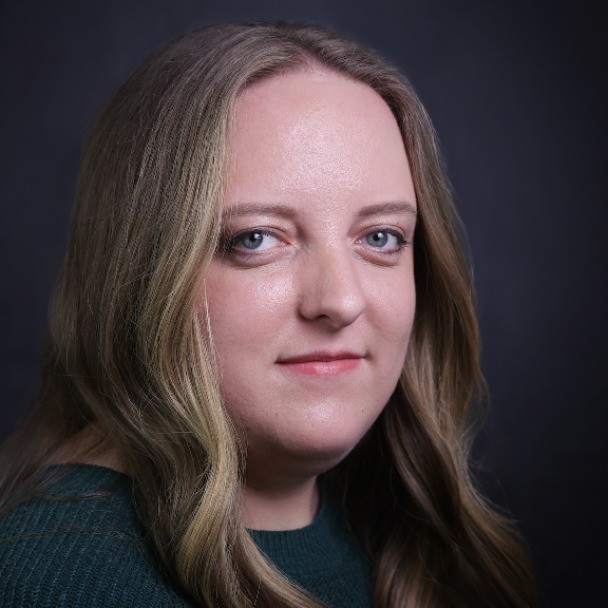
By Matthew O. Leavitt, MD, Founder / Board Member
As my wife Louise and I prepare to move to Romania for the next three years to fulfill a church service assignment, we step away from a cause that has become far more than a company. Only our devotion to God and our family ranks above the mission Lumea represents to us.
That mission led us to leave a stable hospital-based practice—trading certainty for years of risk, stress, and sacrifice. I am deeply grateful to Louise, our children, and our extended family, who recognized its importance and made sacrifices of their own to help bring us here.
If my adult life were a three-act play, we are now approaching the close of Act Two. Before the curtain falls—and before our three-year Romanian “intermission”—I want to reflect on a few defining scenes from Acts One and Two, and offer a glimpse of what may lie ahead in Act Three.
A Scene from Act One (1991–1993):
The People in the Hallway
I had no business being in that Romanian operating room in 1992. But the experience changed my life.
Traian Ataman, a renowned ENT surgeon, invited me—a 19-year-old missionary—to observe his first microsurgical middle-ear procedures in Romania. The surgical microscope he used had been provided by one of my mission colleagues, a retired ENT surgeon.
Thirty-four years later, I can still see it clearly.
We followed Dr. Ataman through the whitewashed concrete halls of Bucharest’s ENT Institute. Lining the corridor were patients and families, watching us pass with quiet hope. Many clutched small bags—gifts for the doctor and staff—the informal currency of care in that difficult time.
After scrubbing in, we stood for hours, transfixed, as he restored hearing to one patient after another.
That was the day I decided to become a doctor.
Act One Closes (1994–2013)
Years of training followed—medical school at Dartmouth, residency and fellowships at Stanford, and eight years of clinical practice.
The curtain on Act One fell when with Louise’s encouragement and support I stepped off of the stable, secure path to pursue a more ambitious goal.
Act Two (2015):
A Return to Bucharest
Standing in an upper-floor procedure room at Th. Burghele Urological Institute, I looked out across a church parking lot and saw the ENT hospital where my journey had begun.
More than two decades had passed.
This time, I returned not as an observer, but with purpose—visiting the operating room of Professor / Director Viorel Jinga to evaluate a new method for processing biopsy tissue. The method was developed by Sorin Mușat, in collaboration with Drs. Jinga, Farcaș, and Petrescu.
Why travel halfway around the world for this?
Because my colleagues and I had built a digital pathology lab in the western United States—and discovered a hard truth: the workflow was too inefficient to scale.
We had already begun rethinking the fundamentals—patient registration, tissue tracking, image acquisition. That work improved efficiency. But the real breakthrough came through collaboration with Dr. Mușat and his team, and their work on the BxChip.
Dr. Mușat focused on a neglected but critical problem: biopsy tissue handling. Small variations—fragment loss, inconsistent orientation, variable processing—can profoundly impact diagnostic quality.
The BxChip addressed this at its core.
Combined with Lumea’s workflow tools, it enabled uniform, scalable tissue processing and digitization. It improved organization, reduced variability in molecular targets, and made consistent imaging possible across labs. It also lowered the barrier to entry for smaller institutions.
In 2015, we saw its potential.
Ten years later, that promise has been realized.
The BxChip is now widely used in urology labs around the world. In a field largely unchanged for over a century, Lumea’s standardized workflow supports a significant portion of community-based pathology. AI developers and pharmaceutical partners now recognize the value of higher-quality specimens, better images, and consistent downstream testing.
The Close of Act Two (Present—April 2026)
As Louise and I return to Romania for our service mission, Lumea moves into Act Three.
Here is what I see ahead:
Twelve years ago, we set out to build a better histology workflow—one that could enable scalable, affordable digital pathology while raising the standard of tissue handling.
We proved it in urology.
Now, that foundation will expand.
New applications of Dr. Mușat’s artificial tissue matrix will extend into GI, dermatology, gynecology, breast, and lung pathology. Many of these advances are already underway through Lumea’s Romanian teams and research partners.
When we return in three years, Lumea will no longer be a niche prostate biopsy company. Its materials science innovations—imaging fiducials and workflow systems—will reshape how pathology specimens are processed, imaged, and tracked.
This is more than a company.
It is a set of foundational solutions designed to expand access to high-quality care—especially for patients in under-resourced settings.
Why Lumea Exists
Lumea did not begin in a boardroom or with a pitch deck. It began in a hospital hallway in Bucharest.
The image that has stayed with me for nearly 35 years is not what I saw in the operating room—but the line of people waiting outside.
They were the fortunate ones—the few who had found their way to the only surgeon in the country capable of restoring their hearing.
But what about everyone else? That question has never left me.
Even when curative treatments exist, access to them is often limited to the fortunate few.
Long before I became a pathologist—before I understood the critical role pathology plays in guiding treatment—I knew I wanted to help close that gap. That was Act One.
In Act Two, through Lumea, we have begun to see the impact these tools can make in connecting patients from community based practices to the best diagnostic care.
When people ask me the origins of the company’s name, I think of those faces of the people lined up in that hospital hallway in 1992.
“Lumea” is a Romanian word.
It means “the people.”