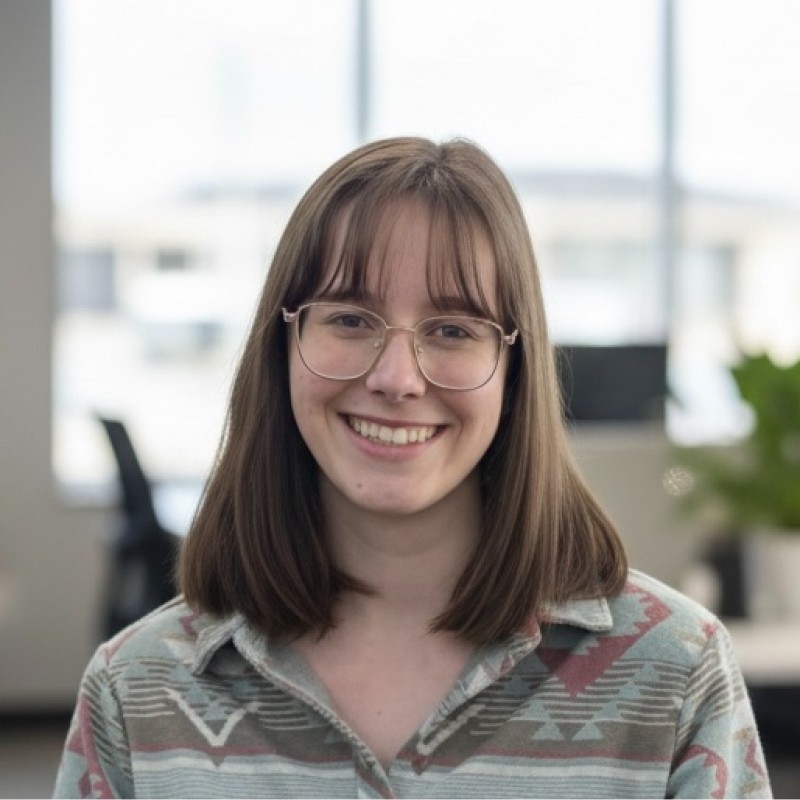

Welcome to another episode of PathPulse, a podcast co-sponsored by the Digital Diagnostic Summit. In this episode, podcast host James Thackeray sits down with Stephen Hess, Senior VP of Business Development at AIxMed, to discuss a big missing link in most digital pathology setups: cytology.
In this episode you’ll learn why cytology is so important to Steph, from both a very personal perspective and a logical standpoint. You’ll hear about his goal to reduce the need for invasive testing, learn about the current landscape of bladder cancer care, the potential of AI, workflow challenges, and how all of this could have a massive positive impact on patient surveillance and quality of life. This is a conversation you won’t want to miss! Dive in now:
Transcript
James Thackeray
Welcome to PathPulse, the digital diagnostic podcast. This podcast showcases pioneers, innovators, and forward-thinking individuals within the digital pathology arena who are actually making a difference in day-to-day use. I’m James Thackeray, and in today’s episode, we’re looking at the human side of the algorithm, specifically how AI is actually reducing the need for some invasive testing and improving the patient experience.
We’re honored to have with us, Stephen Hess, Senior Vice President of Business Development at AIxMed. Steph, welcome to Pathpulse. We’re so excited to have you on with us today.
Stephen Hess
James, thank you for the invitation. I’m excited as well. My background is actually on the engineering side of things. I’ve spent over a decade building diagnostic systems for other companies. But one of which was actually urine cytology with AI, machine learning back then for veterinary application. And that ended and went commercial about five years ago.
And then, right after that, I met the two co-founders of our company, Samuel Chen, who is an AI expert and Dr. Tianyin Liu’s ear, nose and throat specialist together. That’s the AI with the medicine. And that’s where we got our company name from. And they had an AI cytology platform with the first diagnosis or the first application was for diagnosing urine slides.
And I was like, “this is, they have something.” And then, at the same time, unfortunately, my uncle was diagnosed with bladder cancer. And I kind of view that as an omen that this is the opportunity of a lifetime. And over the last four years, we’ve been progressing our product along.
But unfortunately, you know, and along the way I’ve seen, you know, the journey of my uncle dealing with the pain of and suffering of bladder cancer and the different, you know, cystoscopies, et cetera, that he’s undertaken. And, unfortunately, last month he passed away. So for me, James, it’s very, very personal for us and for the company.
The Landscape of Bladder Cancer Care
James Thackeray
Steph, first, thanks for sharing that about your uncle. I think cancer becomes personal to all of us at some point in our life’s journey. And it really seems to have been something that’s influencing you into the efforts that you guys are making at AIxMed, which is not only personal, but obviously pretty impactful.
It feels to me that bladder cancer has been getting more attention recently. I believe it’s driven by new therapeutics that are out for bladder cancer. But have you kind of seen a shift towards focusing in on some of the things that…not only AI, but even just in general, some improvements within the workflow of bladder cancer and patient care?
Stephen Hess
Yeah, so we’ve definitely seen, because the manual microscopy workflow is very subjective. And then the urologist gets those results, oftentimes they’re inconclusive. Then they’re doing, you know, using this, going in with a cystoscopy and looking around with a camera. That’s also subjective as well in terms of finding cancer, bladder cancer.
And then on top of that, previously there weren’t, as you mentioned, many therapeutics, those are coming up. I’m not as on to what’s coming through, but you see all the time another announcement of another therapy for bladder cancer, which makes it more treatable.
But you know, one of the things about bladder cancer is that it’s the fourth most prevalent in men and it’s the most expensive cancer because it keeps reoccurring and reoccurring and reoccurring. So even though it’s number four, it’s actually the most expensive cancer when you think about the entire treatment.
Traditional Workflows vs. AI Potential
James Thackeray
Yeah, that’s great insight. Tell me, let’s kind of start with some of the basics. I mean, what has historically been done when we’re looking at screening or at least early stages of diagnosis within bladder cancer? And what has it been, or at least what is your hope that the algorithms and algorithms that you’re developing will do within this kind of workflow?
Stephen Hess
Right. So the patient typically presents with hematuria and then a urine slide is then, a urine is captured, a voided urine is captured, then it’s processed in the lab with liquid-based preparation method. And then that slide is then read by, first, a cytologist, and then a cytopathologist or general pathologist that’s on rotation for urine that week.
And then the diagnosis is presented to the urologist. So that’s typically how the workflow is there. But if someone has already had bladder cancer, then they’re on a three-month surveillance period, and they’re constantly going through this urinalysis as well as, oftentimes, a cystoscopy, as it happens in conjunction with that even before the results are rendered by the pathologist.
James Thackeray
And how does, so now as we kind of get into this new era of looking at what AI can do, especially from the patient perspective, kind of walk me through what changes happen into that workflow when you have AI that might be capturing something that, historically, has been difficult with, say, for example, atypical…Just walk me through that piece a little bit, where we’re going with what AI can do.
Stephen Hess
Yeah, so I think it goes back to, and one of the big changes that’s happened was in 2016, when Dr. Wojcik, Dr. Curtis, and Dr. Rosenthal and their teams published the Paris System. So that was the first time that there was a definitive work on quantifying suspicious and atypical cells and abnormalities and what those criteria are for reporting bladder cancer. And they did an awesome job with defining the cell structures and what the criteria should look for, morphological criteria as well as size, et cetera.
But the one issue with it, though they, amazingly the data that we have, they picked the right endocity ratio in nuclear area. Those cutoffs are difficult to assess consistently and accurately by the eye, the human eye, right? So you have a cytologist looking for these different shapes and cells, but what’s the difference between a 0.60 and a 0.70 nuclear to cell ratio, right?
And then, you know, that’s a challenge, right? But that’s something that AI can pick up and present quite easily. And then it’ll, you know, then it’ll allow, plus all the other criteria as well, allows really for AI to blossom. And then you can present those criteria of NDC ratio of nuclear area, clumped chromatin, generation, et cetera, to the pathologist.
And instead of the pathologists searching for these types of cells, they’re actually presented with these cells and then they can make a diagnosis of “Yes, I agree,” or “No, I don’t.” So they spend less time searching and more time diagnosing.
Impacting the Patient Surveillance Cycle
James Thackeray
That’s awesome. It sounds like not only is it a technique in which we’re getting a lot more sensitive and specific information out of it using these algorithms, but also you mentioned kind of the three months’ surveillance. If we kind of bring it back to the patient and that waiting game, which I think any of us that have had family or friends that are going through this, you know, the journey of cancer, that waiting period, whether it’s even on recurrence of disease or original diagnosis, that’s a tough, obviously, timeframe for the patient. Tell me how that, like a technology like this, will influence that surveillance period.
Stephen Hess
Well, one of the things that it would do is allow, potentially allow for this surveillance to be only a voided urine and potentially skip the step of a cystoscopy. So if there is confidence in the voided urine results from the pathologist by the urologist, then they won’t necessarily order a cystoscopy right away.
And from, you know, we also had another board member and we wrote an article in The Beacon about her journey with her business partner, where after multiple cystoscopies, he just stopped the surveillance process. And he had one clear one and he’s like, I’m not going back. And he kept deferring, deferring, because the cystoscopy was so painful for him, but that’s the standard of care, right?
And we’re hoping that this more confidence and the higher sensitivity with AIxURO™ will change that standard of care so that cystoscopies are only done when required. And there’s more confidence in that information.
Digital Integration and Workflow Challenges
James Thackeray
That’s super helpful. So as you, you know, we’ve integrated this in at Lumea into our system, because we’re, I think our philosophy has always been that the workflow of these different tests and it can be, you know, outside, external ancillary tests that need to be ordered, or it can be AI that can be applied, but where in the workflow those get instituted is incredibly important.
And I think we just see that because again, it comes to how quickly can we get to the results? How quickly can we get back to the patient? Obviously, how much better can we improve the diagnostics process in general? As you kind of see this moving forward, going from kind of a research use, which this currently is in, and you’re starting to get the feedback from cytopathologists around the world, likely, what’s been most interesting to see as they start to try to figure out where this fits in?
Stephen Hess
Yeah, sure, sure, sure. So I think what’s interesting, and I’m glad you brought up the workflow, James, because that’s super important. You may have the best technology in the world and maybe super helpful, but it doesn’t fit into the pathologist workflow, the uptake is, it adds so many more complexities because they have so many different things that they are tasked with diagnosing in a day, that we need to fit into that.
So we’ve looked at the workflow both, you know, we’re able to, our software is robust enough so we can take all liquid prep methodologies. We can utilize any open DICOM scanners, we just need a clear image.
And then integration, like we’ve done with BxLink, right, is so important for pathologists so that when they do the final signout, they’re not working in multiple systems, opening the screen, opening that screen, looking at patient records, and everything is together. And that is, you know, super powerful for not making transcription errors and making sure that everything is together and they can do their job well and better and more efficiently.
The Evolution of Digital Cytology
James Thackeray
Yeah, it’s great. It’s been interesting to watch, kind of just in general, the digital pathology journey and where cytology has fit into that journey, right? I mean, I think we’ve gone from, okay, you gotta have Z stacking, you gotta have certain things and all these things in place, which fortunately, most of the scanner companies have adopted those kind of, that kind of technology.
And so I think we’re there from that perspective, but it’s been maybe a little slower in uptake on the cytology side, certainly on the urine cytology side of things. I think what gets exciting to me, and I’d love to get your thoughts on this, is when you have algorithms like this that potentially have such an incredible benefit throughout the process, it just is that much more incentive to get organizations to kind of think about why they would go digital.
How have you kind of seen that process playing out in the real world? I feel like we’re going from concept to actually implementation. And maybe it’s taken us, and sorry if we’re going on a little bit longer, but maybe it’s taken us four or five years longer than we originally thought this would take. But it certainly feels like adoption is full on, we’re going, implementation is now.
How are you seeing it from your lens within the industry?
Stephen Hess
We’re seeing that as well. I think, you know, everyone talks digital pathology, but histology has been further advanced because the whole slide image scanning algorithms to find the layer that they’re supposed to be focused on, and this is back to workflow, actually, they can find that layer of tissue no problem all the time, over 95 % of the time, 99% of the time, no issues.
With cytology, it’s more of a swimming pool that’s about 30 microns thick, and you have a focal plane of one and a half microns, right? So you have to find the right layer. And we’ve worked, really the first three years I was with the company, that was our focus, was working with some of the whole slide image scanning companies to help them find that layer of interest and then we can take that image and process it.
The software has been ready, the AI software has been ready. The whole slide image scanners have been a little bit behind in that. But now that that’s coming aboard, we have a full-fledged system. Together, we’re presenting with Hamamatsu an entire workflow. And you already have that demonstrated in your labs in Utah. But we’ve shown that also at customer site. So we’re going to be presenting that at the ECDP.
And together, you know, that’s what people want: a turnkey, but not locked into a particular company per se, but know that there’s something I can call somebody and I can get something that’s off the shelf and ready to go. But I don’t feel like I am beholden to one company forever.
Training and Global Adoption
James Thackeray
That’s so great, because it has been at least, again, from my viewpoint, when you think of different, I mean, if we just stayed in urology, for sure that’s been a gap, right? You get these groups that recognize what digital pathology can do for the patient, for the pathologist, for all the reasons…we’ve already done the workflow, everything we’ve kind of already talked about, but the gap has been cytology.
We have mass groups that have adopted digital pathology on the H&E and the histology side of that, but have this gap where, okay, not that it defeats the purpose, I wouldn’t say it does, but this has been a gap to where they’ve wanted, how do we get now the cytology piece? And I do believe strongly that it’s these type of, this new technology of algorithm development within cytology that will actually..”force” is the wrong word, but at least “direct” us into looking at cytology as going digital.
And so I get excited about it. Not that it’s hard to get me excited about AI, but what you guys are doing is really, really awesome. Now I’m gonna just open it up. What do you wanna talk about from what you’ve seen within the industry or what you guys are developing that gets you really excited about kind of the future of this.
Stephen Hess
Yeah, sure, sure. Well, I think before I got to that, James, to maybe your point you just made, no one can say they’re 100% digital unless they’re looking at cytology as well, because it is now and it’s ready. Hologic is doing it with PAP. DataXM is also doing it with PAP in Europe. We’re working in on the urine side. Thyroid is being developed by us soon as well. So we’ve had some papers on that already.
But one of the, you know, a couple of things that are super exciting. One is, you talked with Dr. Matt Ceccini in a previous podcast about training. We’ve actually announced an agreement with ASCT working with Michelle Smith, Donna Russell, Kathy Bammer, Josh Howell, General Blank. Like all the major cytologist training grounds, we’re digitizing their slides for them. And we are, and actually, they’re being digitized at your facility in Utah. So we’re putting them up on the web. That’s their slides. But together they have the glass and they have the digital, and they can train on both, and they can look at those differences in N/C ratio.
Those differences in nuclear area, really see what they look like and really empowers them to the training aspect of things. But also, know, and as they go out there, they’re ready for the digital world while they live in the manual microscopy world.
And we actually have a certificate program that we’re proud of. Dr. Crothers and Karen Atkinson have put that together. And we’ve had over 100 people trained in just the last four months. So that’s super exciting.
Refining the Science and Pathology Confidence
James Thackeray
That is, that’s exciting and such a key element. I think you’re right. I think sometimes we jump ahead and like, okay, how do we get this into commercial use? But how do we get the training in kind of the foundational areas where it’s happening before we get to the next phase? I think that that makes a lot of sense. That’s pretty exciting.
Stephen Hess
Yeah. And then one other thing that has been super exciting is we’ve been working with some of the co-authors of the Paris system. And so Dr. Lisa Zhang, together with Dr. VandenBush and Dr. Allison and Hong and Laura and Lou have used our software to define, further define, the Paris system criteria and they’ve presented at ASC (American Society of Cytology) their initial findings, but there’s multiple papers that are coming from that.
And what’s interesting is that they’re finding, you know, some nuances that could be beneficial in terms of the nuclear area size, having maybe an outweighed influence over morphology. So that’s, we’re changing the course of, you know, slowly, you know, of how the disease is diagnosed. And that is amazing. And we’re able to provide, also, those quantitative parameters, like I said previously, that’s manually, it’s hard to, you know, I can’t tell the difference between 0.5 and 0.6 and 0.7. just, but then again, I’m an engineer and not a pathologist, James.
James Thackeray
Well, it’s pretty awesome. I mean, the sky is the limit, right? Because you’re just really starting into it. I mean, you’ve got the algorithm, but the algorithm is only going to get better the more images that it’s absorbing. And that’s where I can see where this is going to go really rapidly, is once we have these databases that have been scanned and are ready. And I know that’s actively happening all over the world, really, right now.
But just think of that, I mean, now you have all these different images that you can apply these algorithms to. And I think you’re going to find, like you said, so many little nuances that we’ve never really been able to either categorize or mostly categorize, right, that have an impact downstream that we just wouldn’t have known without that ability to look through mass data.
Stephen Hess
Yeah, yeah. And then some other areas that are great are in terms of people that are utilizing it. They’ve used various interpretations of the parasympathetic They feel comfortable now that they’re actually using the gold standard. Even the best of the best are seeing improvements in sensitivity. Everyone gives us that one case that bugged them and they keep on their desk for the last five years.
They throw that into evaluation and we find the cells of interest and all of sudden they’re believers. And everyone that uses our software, they’re using it in different ways. Some are using it as a primary, some are using it as a secondary and some are using it as a QC.
They’ve self-validated in different parts of the world. And they’re all seeing that they’re spending less time and they have more confidence in their diagnosis.
And finally, the most exciting thing is that pathologists and cytologists are delighted. At first, they’re skeptical. Once they use it, they are so excited because it liberates them from all the manual scanning they need to do. They still need to review the entire slide, but especially the highly suspicious or the negative cases or there’s inflammation, they’re finding things that are the appropriate cells and it’s, they’re not busy counting. They’re not busy spending minutes scanning. The information is brought to them, and then they use their experience and training to make the diagnosis.
Conclusion: Standardization and the Future
James Thackeray
That’s awesome. I think, in summary, if I were to summarize what you guys have done with your technology and continue to do, I love it. Delighting the pathologist, absolutely. If you can delight the pathologist, then you know you’ve got something really cool.
I think the other two things that I took out of that that you said that are really impactful are one, confidence. It gives the pathologist confidence. And I do think that’s what digital pathology and the access to these types of algorithms can provide, which is confidence.
And I think the last thing that often, I mean, pathologists get this better than anyone, and that’s standardization. There’s often a lack of standardization. I actually think these algorithms, when done right and applied broadly, will bring standardization to a lot of the work that pathologists have to do. So I think you hit all those points right on, which is awesome. This has been great. Any last comments, Steph, before we go?
Stephen Hess
Yeah, I just think, you know, we’ve been talking about this, and you mentioned in the beginning, but the future is really data-driven diagnostics. AIxMed, you know, and then this AIxURO™ product can provide that and the urine side. And the future is right now. It’s not, it’s not yesterday. There are workflows that are ready to go.
James Thackeray
Well said. Well, Steph, thank you. This has been a lot of fun. I’m so interested in what you guys continue to do. I would love to have you back as you guys continue to make progress so you can update us on some of the new technologies you guys are bringing forth. I actually got all excited when you talked about thyroid because I think there’s some cool things.
Yeah, anyway, my mind went crazy with that already. So maybe we bring you back next time and you guys are further in that development. We’d love to hear more about that as well. But thanks again for joining us, and we look forward to having you on in the future.
Stephen Hess
My pleasure. Thank you so much, James.
James Thackeray
Thanks, Steph.
Enjoy podcasts and more information like this? Sign up for our free bi-annual Digital Diagnostic Digest for more: